Ancient Knowledge
Modern Science
Three Questions Nobody Will Fund
These are the core lines of inquiry behind everything SOL does.
Is Consciousness Fundamental?
Every tradition SOL studies starts from the same premise: consciousness is primary, not a byproduct of matter. Modern research—quantum theories of mind, integrated information theory, non-local awareness studies—keeps arriving at the same conclusion.
How Old Is Civilization?
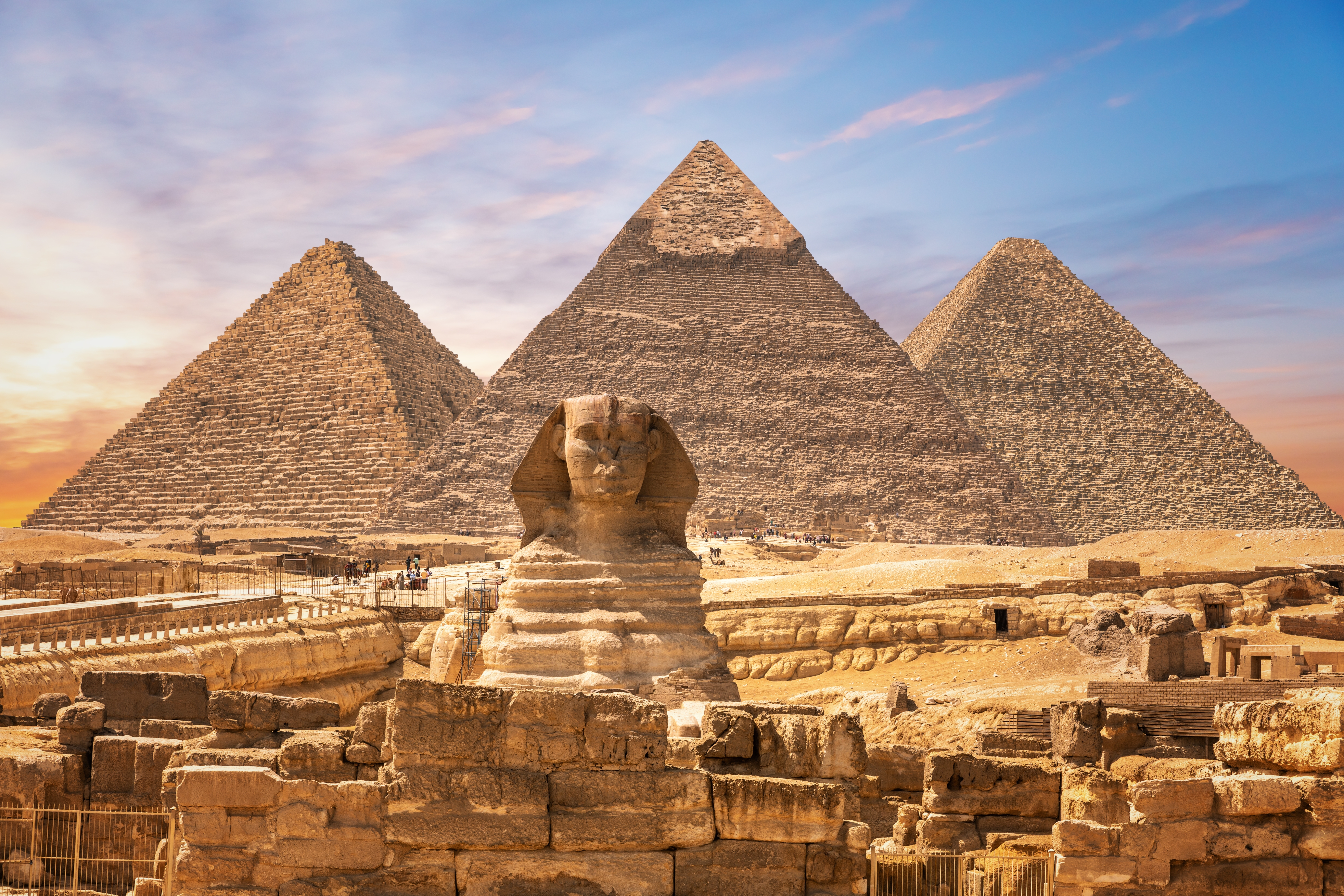
Göbekli Tepe. Underwater ruins. Megalithic precision we can't replicate. Catastrophe myths across cultures that never met. The standard timeline says 5,000 years. The evidence suggests something far older was lost—and the surviving traditions may carry its knowledge forward.
Did They Preserve Real Knowledge?
Kabbalah, Hinduism, Gnosticism, and Buddhism show striking structural overlap across independent contexts. The convergences are significant enough to investigate, while alternative explanations should be tested in parallel.
Two Approaches, One Investigation
If these traditions really did preserve real knowledge that degraded into allegory over millennia, there are only two honest ways to test it. Investigate treats ancient texts as potential records of real observations—comparing them with emerging science to find out what holds up. Experience takes you inside the inner meanings the traditions were designed to transmit—not to inform, but to transform. Neither is complete alone. Together, they are the reason SOL exists.
Investigate
Compare what the traditions describe with what science is finding. Evidence over ideology. Original languages. Cross-traditional convergence examined with open-minded rigor.
Experience
Step inside the teachings the way practitioners did for millennia. The root problem isn't sin or punishment—it's amnesia. Every sacred text exists to help you remember what you are.
What Did the Ancient Traditions Actually Know?
When you line up the world's oldest wisdom traditions side by side, something strange happens. They agree with each other. Not in vague, hand-wavy ways, but in specific structural details—details they had no obvious way of sharing. Kabbalah, Hinduism, Gnosticism, Buddhism, Hermeticism, and Neoplatonism all describe the same basic architecture of reality. The question is why.
This is not about belief. This is about pattern recognition. When multiple independent sources, separated by centuries and continents, converge on the same structural claims, that convergence itself is data worth taking seriously.
The Shared Architecture
Every one of these traditions describes the same fundamental movement.
There is an original unity. Undifferentiated, without boundary, without form. Kabbalah calls it Ein Soph (without limit). Hinduism calls it Brahman. The Gnostics called it Bythos (Depth). Buddhism points to it but refuses to name it, calling it simply "the unconditioned."
That unity undergoes some process of self-limitation, stepping down through intermediate levels of increasing density and specificity. At the bottom of that descent, you get the physical world, where consciousness has become so condensed that it no longer recognizes where it came from.
And then every tradition maps a return journey—a way for consciousness to re-expand and remember its source while still embodied.
Same skeleton. Different vocabularies. Developed independently.
The Descent: How Does the One Become Many?
Each tradition identifies the same structural cause for the descent, but frames it in its own language.
Kabbalah says the original vessels could only receive and couldn't give back. Pure absorption without reflection. The system became structurally unstable and shattered, scattering sparks of the original light into fragments, each one now encased in a shell of dense material.
Gnosticism tells it as a story. Sophia (Wisdom) tried to create by herself without her counterpart, producing an unbalanced creation that resulted in divine light becoming trapped in matter.
Hinduism describes consciousness becoming fascinated with its own productions and forgetting that it is the producer. They call this maya—not "illusion" in the way Westerners usually hear it, but the capacity of consciousness to appear as something other than itself.
Buddhism identifies tanha, craving or thirst—the grasping after experience that creates the cycle of suffering and the sense of a separate self.
Strip away the cultural packaging and all four are describing the same event: a system that becomes oriented entirely toward taking in, producing, grasping, or self-fascination, without the balancing movement of return or reflection. The imbalance itself is what creates density and forgetting.
Four independent traditions. Same diagnosis.
The Levels: Mapping the In-Between
Every tradition maps intermediate levels between source and matter, but they subdivide them differently. Kabbalah gives you four worlds, each containing ten sefirot, for a total architecture of forty fundamental stations. Hinduism, particularly Kashmir Shaivism, maps thirty-six tattvas. The Gnostic systems work with varying numbers of aeons. Buddhism maps the levels through states of consciousness rather than cosmological planes.
These different numbers are not contradictions. They look more like different resolution settings on the same system. Think of it like measuring temperature: you can use a scale with four major divisions, thirty-six fine gradations, or five broad zones. The underlying reality is the same. The precision of the measurement differs.
What Each Tradition Preserved Best
Each tradition seems to have preserved a different section of a larger understanding.
Kabbalah preserved the mechanism of descent with the most precision. Its descriptions of how consciousness steps down through levels of increasing density read less like poetry and more like someone describing a real system in the best vocabulary available to them.
Hinduism preserved the experiential methodology of return with the most detail—extraordinarily granular maps of what a practitioner actually experiences at each stage of re-expansion.
Gnosticism preserved the narrative of fall and recovery with the most dramatic clarity. The story of divine light trapped in matter gives the whole process an urgency the more technical traditions sometimes lack.
Buddhism preserved the micro-analysis of how consciousness constructs the sense of separation moment by moment—precise operational instructions for dismantling the construction process in real time.
No single tradition has the complete manual. But overlaid, they start to look like fragments of one.
The Degraded Knowledge Question
When modern scientists explain complex topics to a general audience, they use allegory, analogy, and simplified imagery. They draw cartoons of atoms that look nothing like actual quantum systems. The math is the real description. The stories are how you communicate it to people without the technical language.
What if the ancient traditions were doing the same thing?
What if the mythological imagery—the divine faces, the cosmic kings, the fallen goddesses—is the popular-science version of something more precise? What if someone, somewhere, understood the actual mechanism, and the texts we inherited are the simplified version drawn for audiences that didn't have access to the original technical framework?
If so, over centuries of transmission by people who faithfully repeated the allegory but gradually lost contact with what it was an allegory for, you would expect exactly what we find: texts that are simultaneously mythological in their imagery and strangely precise in their structural claims. The precision is the residual signal. The mythology is the delivery system that kept it transmissible across generations.
Where the Investigation Goes from Here
The Kabbalistic mechanism of light striking a boundary and generating reflected patterns has structural parallels in wave physics. The Hindu description of consciousness condensing through levels of increasing density maps onto frequency relationships. The Buddhist analysis of how consciousness constructs experience moment by moment is beginning to find echoes in neuroscience research.
None of this proves the ancient traditions were right. But the patterns are consistent enough, and the structural precision detailed enough, to warrant genuine investigation rather than dismissal.
The question is not whether to believe them. The question is whether to investigate them. The convergences suggest the investigation is worth the effort.
This is what we explore at Shimmers of Light.
But What Did They Actually Teach?
The architecture is fascinating. But the traditions didn't map all of this just to be interesting. They mapped it because they were trying to tell you something specific. And the core teaching is deceptively simple—so simple the mind almost skips over it.
You came from the Source. You are made of the Source. And the whole point of being here is to remember that, and find your way back.
That's the teaching. Everything else is commentary, elaboration, and method.
The Diagnosis
The Zohar, the great text of the Jewish mystical tradition, teaches that the deepest layer of the soul—neshamah—comes directly from what it calls "the supreme wisdom." It didn't start here. It came from there. And it wants to go home. The Zohar compares the soul to a prince living among strangers in a distant country. When the prince dies, a wise man asks: "Why do you cry? Is he not the son of the king?"
Plotinus, writing centuries earlier in a completely different cultural world, describes the same dynamic. The soul gets so absorbed in the material world, so identified with what it's looking at, that it forgets it's the one looking. Whatever you give your attention to, you become.
Julian of Norwich, the Christian contemplative, saw it from the other side. She writes that the soul was "oned to the Maker" from before the beginning. The connection was never broken. You just stopped seeing it.
The Hindu tradition arrives at the same place: the awareness you're using right now to read these words—that's not yours in the way you think it is. It's the Source, showing up as you.
The root problem isn't sin. It isn't punishment. It isn't ignorance in the ordinary sense. It's amnesia. You forgot what you are.
The Path Back
From that Source, souls emerge the way light emerges from a flame. They descend into the material world, into bodies, into the density of physical life. And in that descent, they forget where they came from. They get hypnotized by the world of things. They start to think they are the body, the personality, the story.
And then the whole spiritual path—every prayer, every meditation, every sacred text—exists for one purpose: to wake you up. To help you remember.
The Zohar maps the journey out and the journey back. Plotinus maps the forgetting and the remembering. Julian maps the original unity that was never actually lost. The Hindu texts map the divine witness hiding in plain sight behind your own eyes.
You are not what you think you are. You are something far older, far deeper, and far closer to the Source than your everyday mind can grasp.
They wrote it down because they wanted you to stop reading about the fire and realize you're already standing in it.
Your Investigation Toolkit
Everything you need to explore 3,000 years of esoteric philosophy — and test it against your own experience.
The Sources
Not Speculation — The Actual Texts
For 3,000 years, esoteric teachings have been passed down through texts most people have never heard of — let alone read. The Corpus Hermeticum. The Zohar. The Upanishads. The Nag Hammadi scriptures.
We've built a searchable library of primary sources — many in their original Hebrew, Sanskrit, Greek, and Aramaic — alongside verified translations and scholarly commentary. Every citation traceable. Every source verifiable.
And we’re not stopping at ancient texts. We’re building a plan to license newer content across psychology, archaeology, neuroscience, and related fields—so the library stays current, curated, and legally clean.
This isn't a collection of blog posts about ancient wisdom. It's the wisdom itself.
The Guide
An AI That Cites, Not Speculates
Other AIs will tell you about the Kabbalah. Our AI will pull from the actual Kabbalistic texts — and explain them through an authentic lens.
Powered by our verified esoteric library through real-time search, this AI companion doesn't hallucinate or invent. It retrieves passages and cites sources. Two modes, one unified inquiry: Investigate treats ancient traditions as potential records of real observations and compares them with modern science. Experience guides you into the inner meanings the mystery schools were designed to transmit — direct knowing, transformation, the fire of realization.
Neither mode is complete alone. One verifies what the traditions were pointing to. The other takes you inside the experience itself. Your conversations stay private.
Your Lab
Test It Yourself
Ancient mystery schools didn't teach through lecture — they taught through practice. "Know Thyself" was the method, not the conclusion.
- •Record a dream and explore what it might mean — through Jungian depth psychology, Kabbalistic symbolism, or Tibetan dream yoga. The AI shows you how these traditions would view them, and you decide what resonates.
- •Keep a journal of reflections, intentions, and insights — with mood, energy, and stress tracking built in. Over time, you'll have a real record of whether these teachings improve your life, not just your knowledge.
- •Watch patterns emerge across your dreams, journal, and conversations. Recurring symbols, converging themes, dots connecting across traditions — connections you might have missed on your own.
- •Map your birth chart through authentic Vedic astrology and astro-theology — not newspaper horoscopes.
- •Talk it through. Real-time voice conversations when you want to think out loud rather than type.
- •Track meditation and contemplative practices. Notice what shifts — in your awareness, your dreams, your journal patterns. The data is yours.
The esoteric traditions make specific claims. Here's where you test them.
Your dreams, your data, your device. Nothing shared!
The Community
Open Discussion & Shared Research
We're building a community space for serious inquiry—where members can discuss ideas openly, post research findings, and share sources without the noise.
You'll also see events and announcements: live talks, study groups, and field updates—so the investigation stays active, social, and grounded.
Planned module (Phase 2).
We built SOL because these questions deserve better than dogmatic materialism on one side and New Age commercialization on the other. Accurate translations from original languages. Evidence over ideology. Private by design—zero data selling, zero metadata collection. And 80% of your subscription funds frontier research at established institutions.